
Tool Capabilities of Generation 3 and Why They Matter
Today's diagnostics require more than great software
When people think about modern vehicle diagnostics, they usually think about the software powering the repair process. OEM scan tools, remote diagnostics, calibration procedures, and repair intelligence platforms often get the attention because they're what technicians interact with every day.
But every one of those technologies depends on something much simpler, the device connecting the technician to the vehicle.
That connection has become increasingly important as vehicles have grown more sophisticated. If the diagnostic device can't communicate reliably with the vehicle or maintain a stable connection throughout a remote diagnostic session, even the most advanced software can't perform as intended. Modern diagnostics rely on both intelligent software and capable hardware working together.
Modern vehicles demand more from diagnostic devices
Today's vehicles contain far more electronic systems than they did just a few years ago. Advanced driver assistance systems, software-driven features, and dozens of interconnected control modules have changed the way technicians diagnose and repair vehicles.
Those changes have also raised expectations for the hardware performing OEM diagnostics. A passthrough device is no longer simply transferring information between the vehicle and diagnostic software. It needs to communicate quickly, support modern vehicle architectures, and maintain consistent performance throughout the repair process.
As vehicle technology continues to evolve, repair facilities need diagnostic hardware that is designed to keep pace rather than struggle to support newer communication requirements.
Reliable connectivity keeps diagnostics moving
Connectivity plays a much larger role in diagnostics than many people realize. A remote diagnostic session depends on stable communication between the vehicle, the passthrough device, the network, and the OEM software. When any part of that connection becomes unreliable, diagnostic sessions can slow down or require technicians to restart the process.
That's why asTech’s Generation 3 places such a strong emphasis on connectivity. Dual-band Wi-Fi, gigabit Ethernet, intelligent network switching, and the ability to tether to a mobile hotspot through its USB 3.0 host port give repair facilities multiple ways to maintain a reliable connection.
The goal isn't simply faster internet. It's reducing interruptions so technicians can stay focused on diagnosing and repairing the vehicle.
Faster processing supports faster diagnostics
The hardware inside a diagnostic device also plays an important role in overall performance. As OEM software becomes more advanced and vehicles generate larger amounts of diagnostic data, processing that information efficiently becomes increasingly important.
Generation 3 uses a dual-core ARM processor that balances internet traffic and vehicle communication simultaneously, helping maintain responsive communication throughout remote diagnostic sessions. While technicians may never think about the processor inside the device, they experience its benefits every time a diagnostic session feels responsive, stable, and efficient.
Built for today's communication standards
Vehicle communication standards continue to evolve as manufacturers introduce new electronic architectures and faster communication protocols. Supporting technologies such as CAN FD is becoming increasingly important as more vehicles enter repair facilities equipped with these systems.
Generation 3 was designed with these evolving requirements in mind. By supporting modern communication standards and reliable OEM communications, it helps repair facilities continue servicing newer vehicles while preparing for future vehicle technologies. Rather than replacing diagnostic hardware every few years, shops can invest in a device built for where diagnostics are headed.
Designed around technician workflows
Powerful technology is only valuable if it's practical to use. That's why Generation 3 wasn't simply updated internally. It was redesigned around the way technicians actually work.
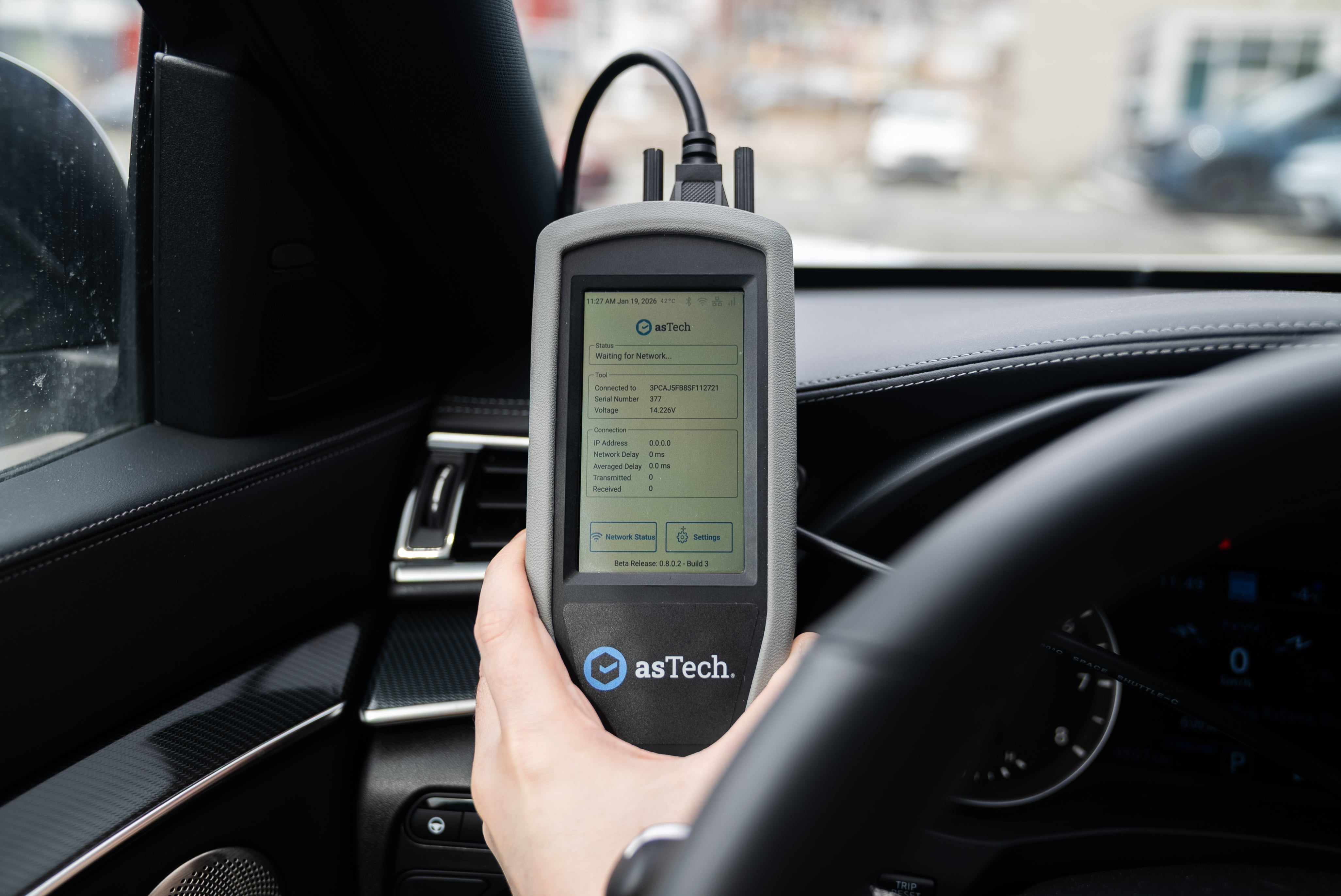
The device features a compact, portrait-oriented design with an integrated touchscreen that simplifies setup and on-device Wi-Fi configuration. It also includes a Connection Diagnostics page that helps identify common network issues such as firewall or DNS configuration problems, allowing technicians to troubleshoot connectivity without unnecessary delays.
These updates may seem incremental on their own, but together they create a smoother experience that reduces friction throughout the diagnostic process.
More than a device. Part of the asTech ecosystem.
Generation 3 isn't intended to operate as a standalone piece of hardware. It's designed to work within the broader asTech ecosystem, supporting remote OEM diagnostics backed by asTech's network of diagnostic specialists.
That combination of advanced technology and human expertise allows repair facilities to perform reliable OEM diagnostics without sacrificing efficiency. Instead of simply providing a connection to the vehicle, Generation 3 becomes part of a connected repair workflow that supports more accurate diagnostics, faster repairs, and greater confidence throughout the repair process.
Generation 3 was built for where diagnostics are going
The value of a diagnostic device isn't measured only by its technical specifications. It also comes down to how easily it fits into a technician's day.
Generation 3 combines faster performance, a redesigned touchscreen interface, and a compact mobile form factor into a device that's easier to move throughout the shop and quicker to configure on the job. Features like the built-in Connection Diagnostics page also help technicians identify common network issues without spending valuable time troubleshooting.
The result is a diagnostic device designed not only to communicate with modern vehicles, but to better support the people working on them.

Share:
Diagnostic Coverage in 2026: Why Depth Matters More Than Ever
Calibration Identification Software: Why It Matters